A resort can be brand new and already obsolete from day one. It may feature striking architecture, a privileged location and an extensive range of services, yet still depend on unsustainable levels of resource consumption, inflexible infrastructure or a development model disconnected from its surroundings.
Real sustainability in hospitality is not about correcting these problems once the destination has already been built. Nor is it limited to installing solar panels, eliminating certain plastics or communicating a series of environmental commitments.
The challenge is to design, from the outset, a resort capable of operating efficiently, adapting to changing conditions and retaining its tourism, residential and economic appeal for decades.
For this reason, sustainability must no longer be understood as an additional layer applied to a project. It must become one of the fundamental principles guiding its conceptualisation, construction and management.
Sustainability is not an attribute, but a decision-making framework
A resort is much more than the sum of its buildings. Hotels, residences, restaurants, golf courses, sports facilities, retail spaces, landscaped areas, mobility systems and shared infrastructure all come together within a single destination.
A decision made in one of these areas can affect the efficiency and viability of all the others. Development density, for example, influences mobility; the choice of vegetation determines irrigation requirements; building orientation affects energy consumption; and the product mix shapes the destination’s activity throughout the year.
Sustainability in hospitality must therefore be approached from a comprehensive perspective.
The Global Sustainable Tourism Council’s standard for hotels and accommodation providers organises sustainability around four main areas:
- Effective planning.
- Protection of cultural heritage.
- Reduction of environmental impacts.
- Social and economic benefits for the local community.
This framework demonstrates that a project cannot be considered sustainable based solely on its energy consumption.
At ARUM, we therefore understand sustainability as a cross-cutting responsibility. It begins with the creation of development models that respect their surroundings and continues through design supervision, the involvement of suppliers and contractors, and the establishment of internal control systems.
The question is not which sustainable measures can be added to a resort, but how the destination should be designed so that sustainability informs every decision.
The masterplan is the main sustainability tool
Many of the decisions with the greatest impact are made before the first building is designed.
The distribution of uses, development density, internal mobility, relationship with the landscape, location of infrastructure and connections between the resort’s different areas will shape its performance throughout its entire useful life.
A sustainable masterplan must begin with an in-depth understanding of the territory. This means analysing the topography, climate, biodiversity, water availability, existing connections, economic fabric and the capacity of the surrounding area to accommodate the development.
Designing in response to the territory
Landscape integration should not be limited to concealing the visual impact of buildings. The territory itself should become a source of information for the design.
Making use of solar orientation, prevailing air currents, natural slopes and existing vegetation can reduce future requirements for cooling, lighting, earthworks and irrigation. At the same time, designing around the specific characteristics of the site helps preserve the qualities that make the destination unique.
In a market where many projects can offer similar facilities, the landscape, culture and relationship with the surrounding area are far more difficult to replicate.
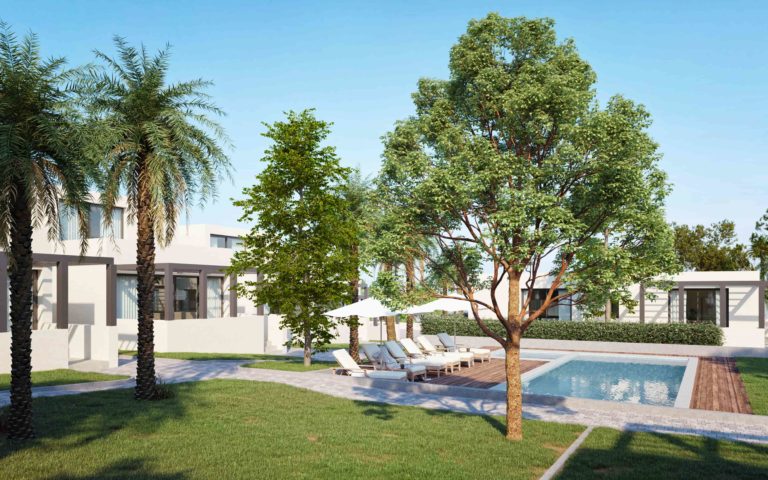
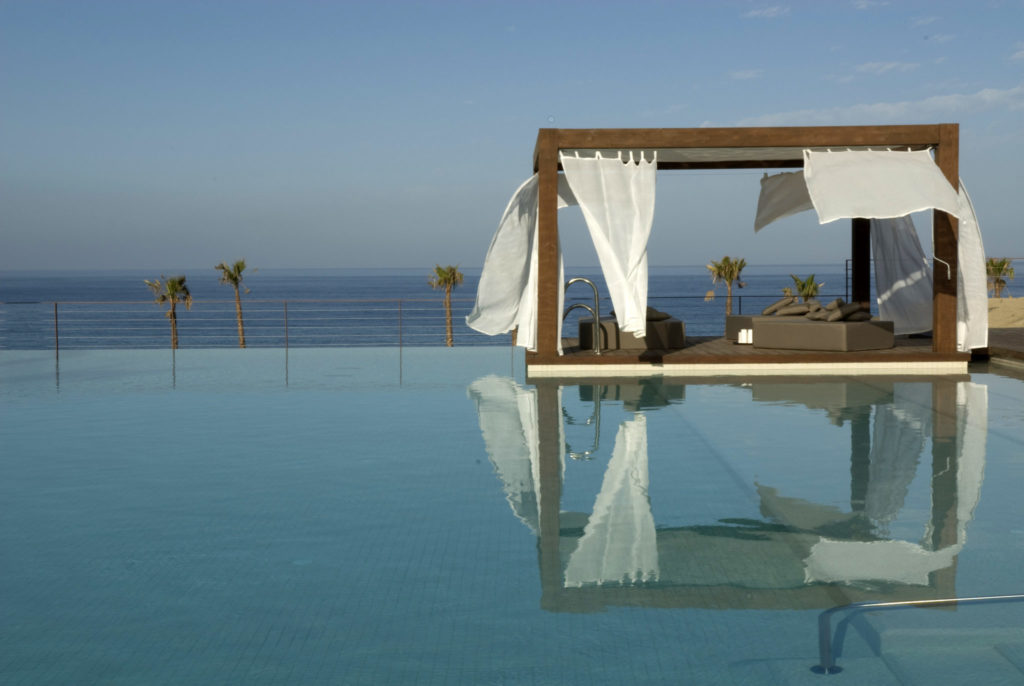
Our Playa Macenas Beach & Golf Resort project is a clear example of this approach. Its masterplan used the coastline and the site’s different elevations to organise the resort, enhance the views and accommodate a broad variety of residential and leisure products.
The objective was not simply to occupy an available site, but to interpret its conditions and create a proposal that was coherent with its surroundings.
Building with the entire life cycle in mind
The cost of a resort does not end when it opens. A significant proportion of its economic and environmental impact is generated during the decades following construction through energy consumption, maintenance, repairs, refurbishments and the replacement of materials and equipment.
Decisions should therefore not be assessed solely on the basis of their initial cost. They must also take durability, ease of maintenance, spare-parts availability, spatial flexibility and total cost of ownership into account.
The European Energy Performance of Buildings Directive is moving precisely towards this approach. In addition to promoting a zero-emission building stock by 2050, it introduces the assessment of buildings’ global warming potential throughout their entire life cycle.
This perspective is particularly important in hospitality. A resort must maintain a high standard of service while also being able to refurbish its facilities, adapt its offering and respond to new requirements without undergoing continuous structural transformations.
Flexible spaces, durable construction solutions and appropriately sized infrastructure reduce the risk of obsolescence and allow the asset to evolve more efficiently.
From energy efficiency to destination resilience
Efficiency is a fundamental part of sustainability, but it is not its only objective.
A future-ready resort must be capable of operating in the face of higher temperatures, extreme weather events, water restrictions, regulatory changes and rising energy costs.
This means moving beyond an approach focused exclusively on reducing consumption and towards one that also prioritises resilience.
| Area | Structural decision | Value created |
|---|---|---|
| Energy | Passive design, electrification, renewable energy and monitoring | Lower consumption and reduced exposure to cost volatility |
| Water | Reuse, leak detection and climate-adapted landscaping | Greater operational security and protection of a critical resource |
| Materials | Durability, circularity and ease of maintenance | Fewer refurbishments and a longer useful life for assets |
| Territory | Habitat conservation and landscape integration | Preservation of the destination’s identity and appeal |
| Mobility | Pedestrian routes and efficient internal transport systems | Lower emissions and a more comfortable experience |
| Management | Indicators, targets and clearly assigned responsibilities | The ability to measure, correct and improve |
These dimensions do not operate independently. Climate-adapted vegetation reduces water consumption; natural shade improves outdoor comfort; and a compact distribution of certain services can reduce internal journeys and simplify operations.
Sustainability emerges from the coordination of all these decisions.
Water must shape the development model
In many coastal, island and warm-climate destinations, water can become one of the main constraints on growth.
Water management should not be addressed solely through water-saving devices installed at the end of the project. It must begin much earlier, with a realistic estimate of the resort’s total demand, including hotels, residences, swimming pools, restaurants, sports facilities, golf courses and landscaped areas.
This analysis can be used to define storage, reuse and monitoring systems, as well as more fundamental decisions concerning the extent of landscaped areas, the selection of plant species and the type of facilities the territory can reasonably support.
The objective is not to preserve any development model while simply using slightly less water. In these situations, sustainability goes one step further and requires the development model itself to be reconsidered.
The ability to recognise the limits of the surrounding environment protects the resource, reduces operational vulnerability and prevents the destination from becoming dependent on increasingly expensive emergency solutions in the future.
Sustainability also means knowing how to evolve
Not every sustainable resort will be a new-build project.
Europe has numerous established tourism and residential destinations that need to renew their infrastructure, modernise their offering and respond to expectations that are very different from those for which they were originally designed.
In these cases, demolition and complete redevelopment are rarely the most responsible or profitable options. Sustainability involves identifying which elements continue to create value, which areas require transformation and how the destination can evolve without losing its identity.
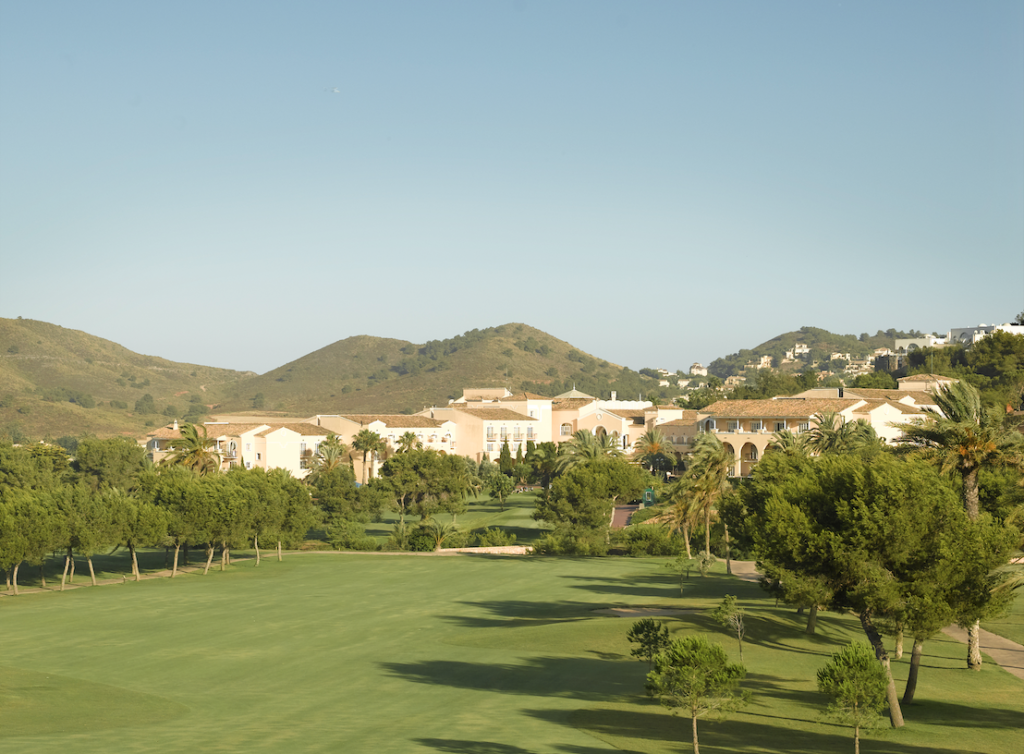
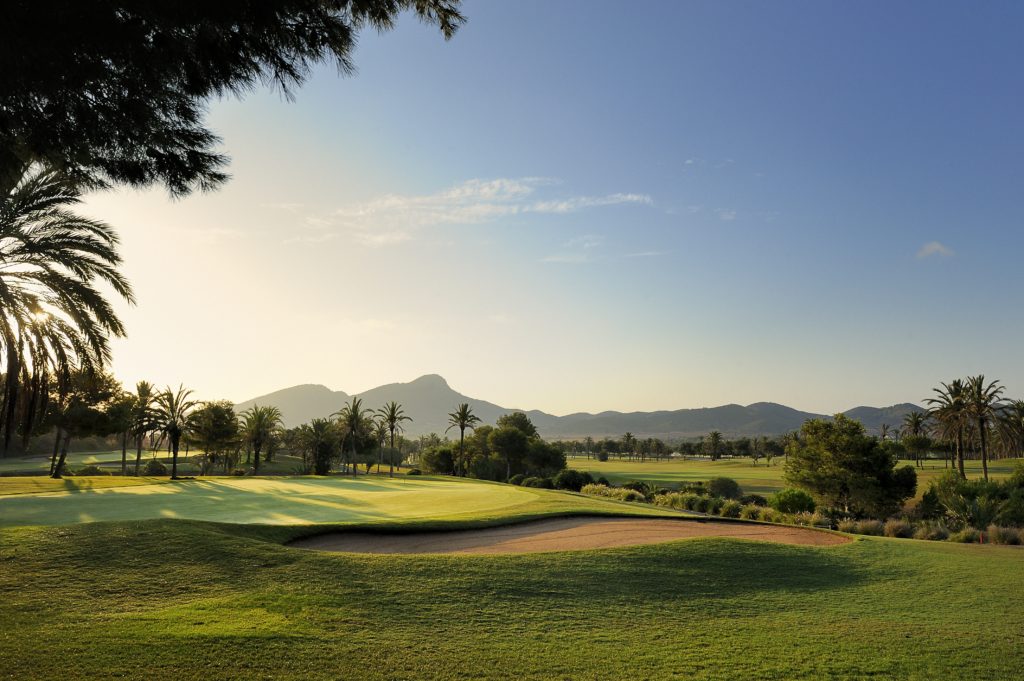
Our work at La Manga Club illustrates this dimension. Rather than treating it as a collection of independent assets, its evolution has required an analysis of the different business units, the restructuring of services, a review of strategic planning and the coordination of residential development with golf, dining and the broader sports offering.
The result demonstrates that long-term value creation does not depend solely on building new spaces. It also requires the active management of existing assets and the preservation of a balance between every part of the destination.
A resort must be able to adapt without losing its identity
Sustainability is also connected to a destination’s ability to respond to new ways of travelling, living and using spaces.
The boundaries between hotels, second homes, branded residences, holiday rentals and hospitality services are becoming increasingly blurred. An excessively rigid project may struggle to adapt to changes in demand or incorporate new products.
However, flexibility does not mean a lack of identity. The challenge is to build a vision strong enough to maintain the destination’s coherence while also allowing its offering to evolve.
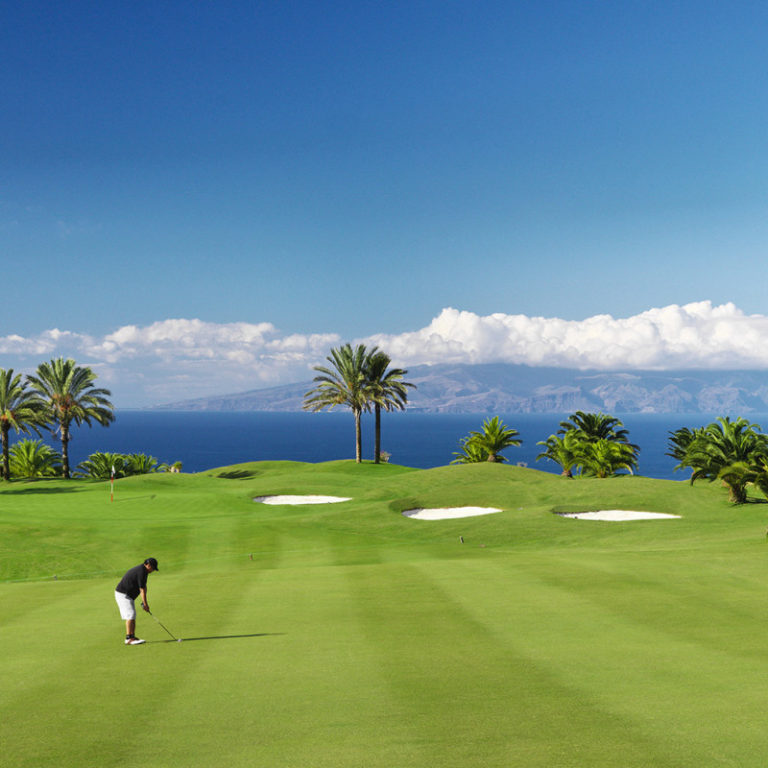
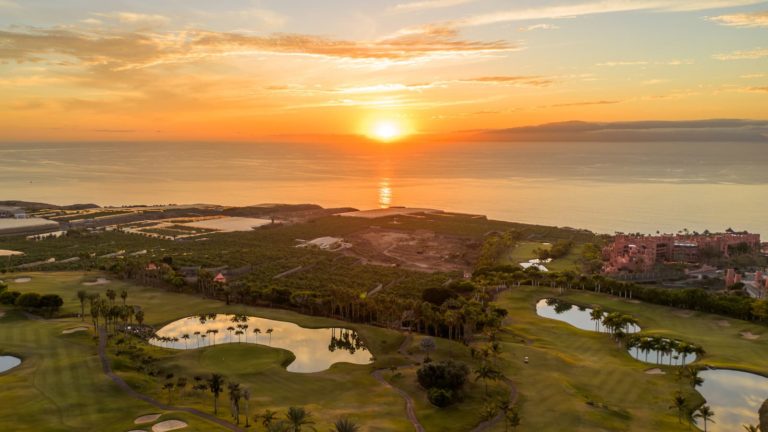
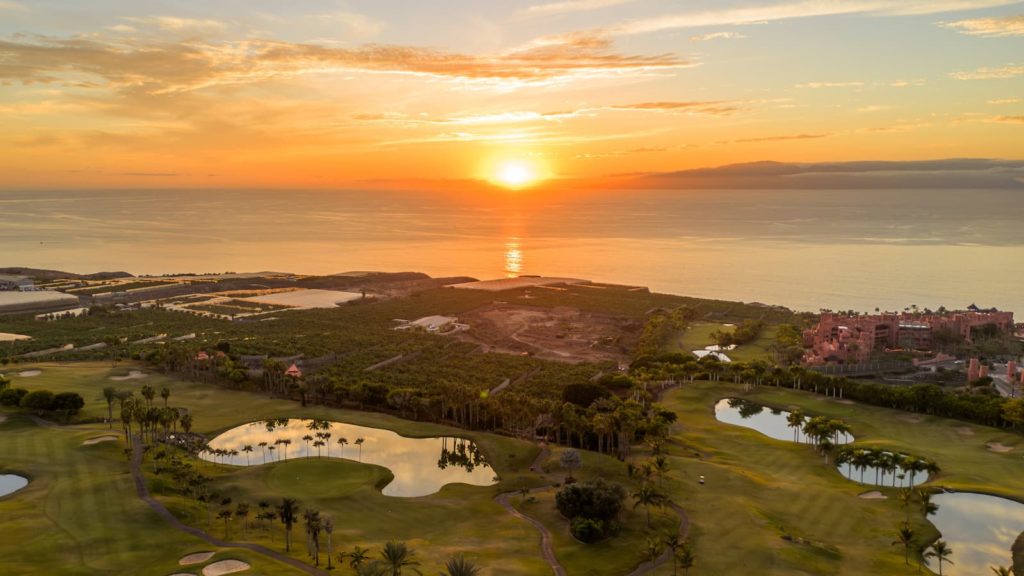
Abama Resort reflects this capacity for transformation. Initially conceived around a hotel and gastronomic proposition, the destination evolved into a tourism and residential community integrating hospitality, golf, dining and different types of real estate.
This evolution has not involved replacing the original concept, but expanding its possibilities through coordinated planning.
Adaptability protects the value of the asset, allows its revenue streams to be diversified and reduces the risk of the resort becoming dependent on a single product or customer profile.

Operational efficiency begins during the design stage
A resort’s daily operations account for a significant proportion of its costs and impact.
Climate control, hot water, lighting, swimming pools, kitchens, laundry services, internal mobility and maintenance must operate continuously and reliably without compromising the experience of guests or residents.
When these requirements are not analysed during the design stage, they become structural inefficiencies that are difficult to correct.
Bioclimatic design, heat recovery, energy monitoring, intelligent climate-control systems and leak detection can all reduce consumption. However, technology only creates value when it responds to the project’s real conditions.
A sophisticated system requiring a level of maintenance that is incompatible with the destination’s available resources may be less sustainable than a simple, robust and correctly sized solution.
The teams responsible for future operations should therefore participate in the early project stages. Their experience makes it possible to anticipate circulation routes, maintenance requirements, consumption points and potential problems that are difficult to identify through plans alone.
The local community is part of the destination’s infrastructure
A resort also depends on what happens beyond its boundaries. It needs skilled professionals, suppliers, producers, public infrastructure, services and a stable relationship with the community that hosts it.
Social sustainability should not be treated as an initiative separate from the business. Local recruitment, training, the involvement of nearby suppliers and the integration of the territory’s culture can improve the quality and authenticity of the experience.
These measures also help build social legitimacy. A project that creates opportunities, listens to its surroundings and shares part of the value it generates will be better positioned to establish itself than one perceived as an isolated space disconnected from the territory.
UN Tourism defines sustainable tourism through a balance between environmental, economic and sociocultural dimensions. In the same vein, the principles developed together with the United Nations Conference on Trade and Development, or UNCTAD, emphasise the training of local professionals, the protection of cultural heritage, social inclusion and the participation of communities in decision-making.
These principles also stress that commitments must be supported by monitoring mechanisms capable of verifying their real impact.
Without measurement, there is no real sustainability
How can a resort demonstrate that it is genuinely sustainable?
Stating that a project respects the environment, reduces its impact or contributes to local development expresses an intention, but it does not make its results verifiable. Moving from commitment to a rigorous strategy requires an understanding of the starting point, the definition of specific targets and the assignment of responsibility for achieving them.
The monitoring system should focus on the factors that have a real impact on the destination. It may measure, for example, changes in resource consumption and emissions, the management of natural resources or the benefits generated for the local community.
The objective is not to accumulate indicators, but to select those that reveal whether the decisions being implemented are working.
Data must be used to drive action. If a facility consumes more energy than expected, a landscaped area requires an excessive volume of water or an environmental measure fails to achieve the anticipated results, the management system must be able to identify the issue, analyse its causes and apply corrective action.
This ability to measure, review and improve is what distinguishes a genuine sustainability strategy from communication based solely on broad statements.
Certifications can strengthen this process by providing shared criteria, a methodology and external assessment. However, they cannot replace a strategy. A certification may demonstrate compliance with certain requirements, but it cannot correct a poorly conceived masterplan or guarantee the destination’s future viability on its own.
How does sustainability create long-term value?
Sustainability creates value when it enables a resort to retain its ability to attract visitors, residents, operators and investors over time.
A properly planned project can reduce operational costs, require fewer interventions, respond more effectively to regulatory changes and preserve the quality of its spaces for longer.
It can also protect the qualities that make it distinctive.
The landscape, biodiversity, gastronomy, architecture and local culture are not merely elements that must be preserved. They are assets that shape the destination’s positioning and make its proposition difficult to replicate.
From an investor’s perspective, this approach reduces exposure to obsolete assets, unexpected refurbishments, increasingly expensive resources and tourism models that are unable to evolve.
Sustainability therefore ceases to be an additional cost and becomes a way of protecting the investment.
Designing today the resorts that will remain relevant tomorrow
As this article has shown, real sustainability in hospitality is not about adding environmental solutions to a conventional project.
It means asking from the outset how the project should relate to its territory, which resources it will require, how it will evolve and what value it will generate for every stakeholder involved.
Answering these questions requires urban planning, architecture, landscape design, construction, operations, real estate development and destination management to be coordinated under one shared vision.
At ARUM, we approach the development of tourism and residential resorts as an integrated process. We analyse the potential of the territory, conceptualise the destination, coordinate the technical teams and support the project throughout its execution and management.
Because a truly sustainable resort is not simply one that reduces its impact today. It is one designed to remain relevant, efficient and valuable in the future.
FAQs about sustainability in hospitality
What does applying sustainability to hospitality mean?
It means incorporating environmental, social, operational and economic criteria into every stage of a hotel or tourism project. This extends from land planning and construction to resource management, community relations and the asset’s future adaptability.
Why must sustainability be defined at the masterplan stage?
Because decisions concerning density, orientation, mobility, landscape and infrastructure will shape the resort’s consumption and performance for decades. Changing them once the project has already been built is significantly more complex and expensive.
Does a sustainable resort require greater initial investment?
Some solutions may require greater initial investment, while others can help optimise the budget from the construction stage onwards. The analysis should focus on the total cost of ownership, including consumption, maintenance, refurbishments and useful life.
How can a resort’s sustainability be measured?
It can be measured through indicators such as water and energy consumption, emissions, waste generation, the percentage of renewable energy used, local employment, asset durability and changes in biodiversity.
Can an existing resort be transformed into a more sustainable destination?
Yes. Transformation may involve refurbishing facilities, optimising consumption, reorganising services, improving mobility and adapting the resort’s offering.
The objective is to make use of existing assets and extend their useful life without losing the destination’s identity.