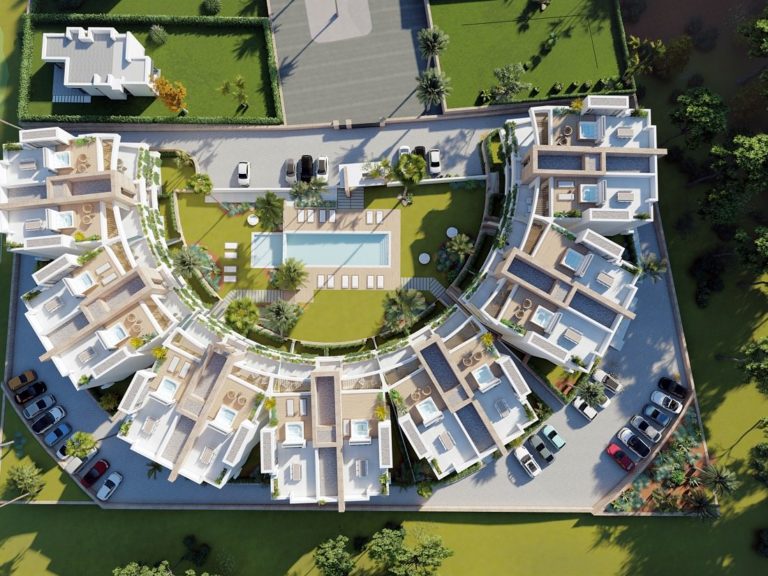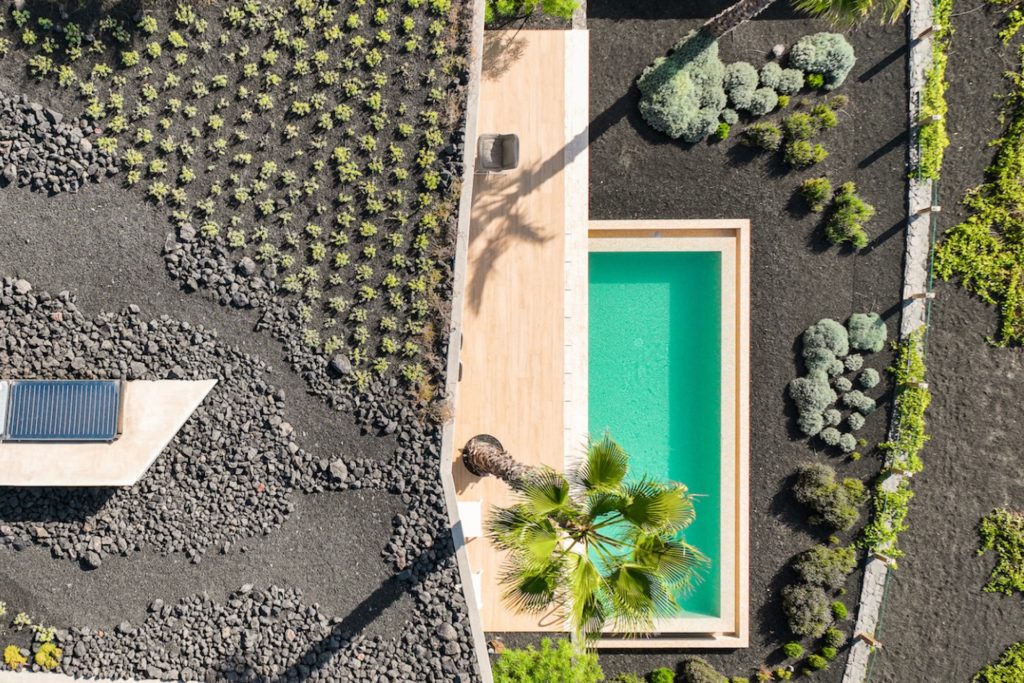
The design of luxury resorts is no longer just an exercise in architectural design. Nowadays, sustainable construction shapes every stage of development, from planning residential units to designing golf courses and engaging with the local community. It goes beyond reducing emissions and conserving water; it means embedding the resort within its natural and social environment sustainably while ensuring both economic viability and environmental responsibility. Projects such as Abama Resort in Tenerife have embraced this approach from the outset, setting benchmarks for environmental harmony and local integration. This type of development includes not only high-end villas and apartments but also a golf course with an ISO certification, demonstrating how sustainability can be a full part of the premium leisure experience.
The construction of homes within resorts presents a range of challenges. The choice of materials, energy efficiency, and sustainable building techniques are all essential. As highlighted in our article on sustainable luxury homes, a sustainable approach not only reduces the environmental footprint and utility costs but also delivers long-term profitability. Investment in energy efficiency, intelligent climate control systems, and recycled materials may require higher initial spending, but the resulting savings and improved reputation offer significant returns in a market that increasingly values ecological responsibility.
Local regulations can further support these efforts. At Abama Resort, for example, the Canary Islands’ “Law of the Skies” protects against light pollution, and its architects have designed both the properties and the entire urban planning layout in compliance with these regulations, reinforcing a model of sustainable integration. This approach demonstrates that sustainable construction goes beyond energy efficiency and green materials; it requires adaption to the surrounding environment and the protection of natural and cultural heritage.
International projects such as The Red Sea Project in Saudi Arabia illustrate the scale that sustainable resort construction can achieve. With plans for 100% renewable energy, green concrete, and zero plastics on site, the development will comprise 8,000 luxury rooms and villas that respect local geography and biodiversity. Discreet luxury has emerged as a global trend. Value is increasingly defined not by ostentation but by subtlety, efficiency, and being environmentally respectful.
However, challenges persist. Sustainable construction demands a higher initial investment, careful compliance with local regulations, technical training of staff and workers, and continuous supervision during construction. Integrating golf courses, leisure facilities, and luxury villas while maintaining environmental standards requires meticulous planning, innovative materials, and intelligent resource management systems.
Measuring the success of sustainable construction is also complex. The installation of solar panels or recycling systems alone is insufficient; sustainability must be considered holistically, taking into account emissions, energy consumption, social impact, maintenance, and community acceptance. Long-term profitability depends on this comprehensive approach, and resorts that achieve a balance between luxury, comfort, and environmental responsibility stand out in an increasingly environmentally conscious and demanding market.
Finally, sustainability must extend to the social. The relationship with the local community forms a strategic pillar of responsible resort development. A sustainable resort creates jobs and opportunities, but it can also have negative impacts if not carefully managed. Planning should involve communicating with neighbours, investing in local infrastructure, and strategies for social and economic integration. The United Nations Sustainable Development Goals, particularly those related to decent work and economic growth (SDG 8) and sustainable cities and communities (SDG 11), provide a valuable framework for assessing impact sand ensuring that tourism projects are both profitable and responsible.
Ultimately, sustainable resort construction represents a paradigm shift. It is no longer about building quickly or making a visual statement, but about creating integrated, efficient environments that respect nature and the community. Projects such as Abama Resort demonstrate that it is possible to combine luxury, residential living, and sustainability without compromising the community experience, offering a benchmark for future developments in Spain and beyond.